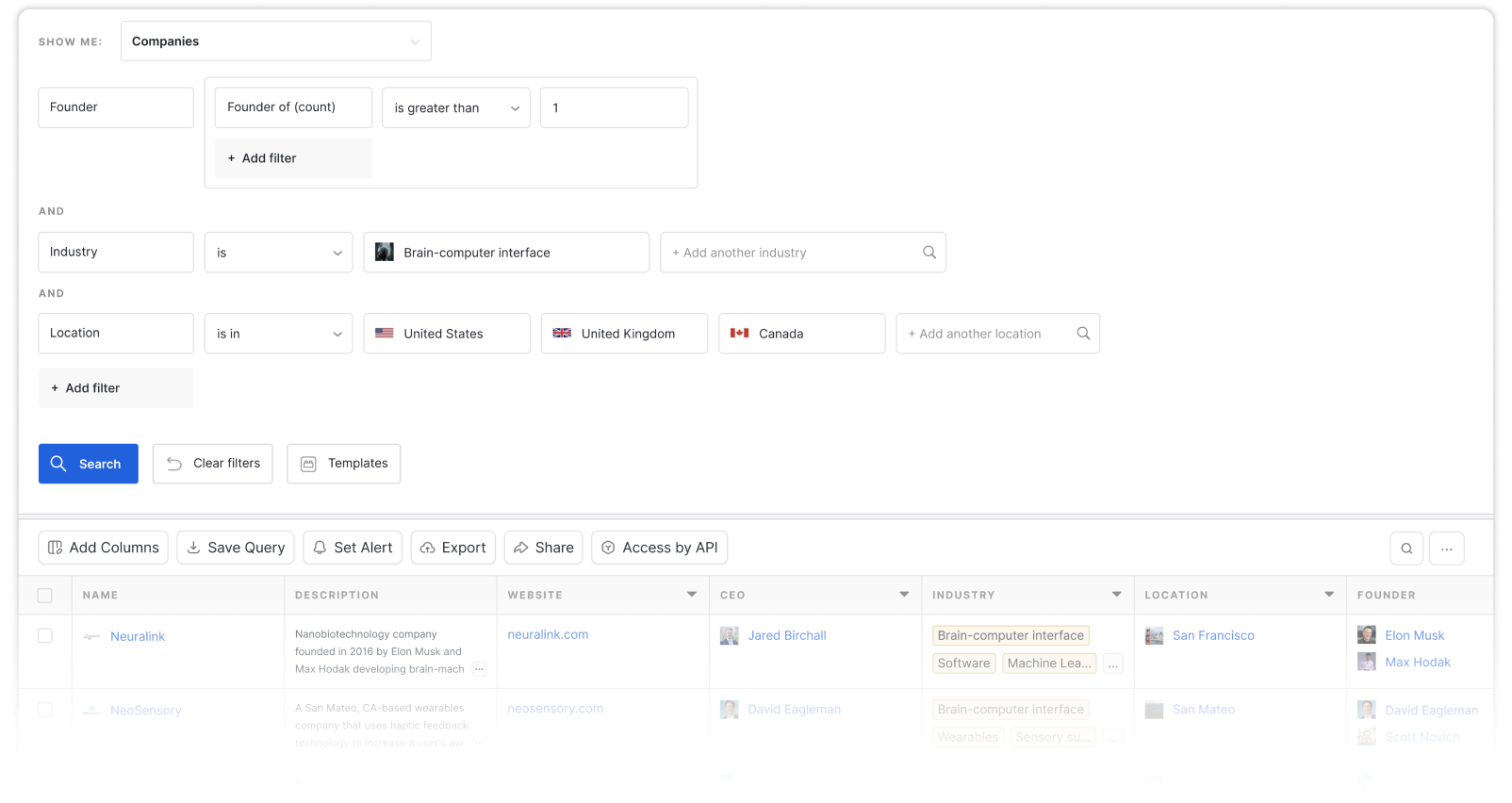
Company attributes


Educational Institute attributes
Other attributes


The MIT Media Lab promotes antidisciplinary culture—mixing and matching seemingly disparate research areas. The Lab creates technologies such as wearable computing, tangible interfaces, and affective computing. Faculty members, research staff, and students at the Lab work in over twenty-five research groups and initiatives on more than 450 projects that range from digital approaches for treating neurological disorders, to advanced imaging technologies that can "see around a corner," to the world's first "smart" powered ankle-foot prosthesis.
The Lab is supported by more than eighty members who provide the majority of the Lab's approximately $75 million annual operating budget.
- In the Affective Computing group, researchers work to help computers recognize and model human emotional expression. These include software tools to help people gather, communicate, and express emotional information and understand the impact emotions have on health, social interaction, learning, memory, and behavior.
- Projects include:
- •Adaptive Music for Affect Improvement—a music generation and playback system focused on bringing a listener to a state of positive affect, where affect change is measured through facial changes and emotion detection
- •ELSA: Empathy learning, socially-aware agents—an AI-powered chatbot that acts as an empathetic companion with a more empathetic neural network conversational AI
The Biomechatronics group works to advance permanent assistive devices to resemble the body's musculoskeletal design, behave more like muscle in movement, and develop control methodologies using principles of biological movement.
Projects include:
•Neural Interfaces—small, implantable devices allowing bi-directional communication with amputated nerves to aid motor functions for prosthesis control and develop a micro-channel array for peripheral nerves to grow into to achieve greater separation of axons by functionality
- •High power bionic joints for dynamic gait actions—works to improve bionic actuators in range of motion, power density, bandwidth, and mass
The Camera Culture group aims to create new classes of computational and sensory platforms to understand the world beyond the human ability for health, work, and connection.
Projects include:
- •Seeing Through Realistic Fog—uses visible light and hardware similar to LIDAR to recover target depth and reflectance to remove inclement weather conditions
- •Streetchange—uses computer vision to measure change in the physical appearance of neighborhoods
The City Science group works toward new strategies for creating living and working spaces in urban environments and the mobility systems that connect them.
Projects include:
- •Piccolo Kitchen—creates a modular platform for culture-specific micro-kitchens; the project includes robotic cabinets and appliances to minimize space while maximizing utility
- •The Power of Without—seeks to identify cost-efficient and lightweight infrastructure systems for rapidly urbanizing areas
The Civic Media group works to understand the relationship between communities, the ecologies of media and technology, and the natures of information and power.
Projects include:
- •Dormio: Interfacing with Dreams—captures dreams in stage-1 sleep to increase creativity through the idea association and idea incubation offered in the absence through controlled and directed attention
- •Space/Craft—explores sculpting in zero gravity by using a hot glue gun to draw in microgravity
The Conformable Decoders work to explore novel materials, device designs, and fabrication strategies to create microscale and nanoscale electromechanical systems that allow intimate integration with objects of interest.
Projects include:
- •Conformal Piezoelectric Mechanical Energy Harvesters: Mechanically Invisible Human Dynamos, which works to create patches integrated in personal garments to extract energy from body movements to charge implanted devices or batteries and provide a power source
- •MiNDS: Miniaturized Neural System for Chronic, Local Intracerebral Drug Delivery, which works to develop an implantable, remotely-controlled, neural drug delivery system to pinpoint drug administration to affected areas with minimal diffusion and leakage
The Fluid Interfaces group design systems and interfaces for cognitive enhancement, intending to help build cognitive skills such as attention, memory, motivation, creativity, mindful behavior, and emotion regulation.
Projects include:
- •AlterEgo—a non-invasive wearable neural interface that allows the wearer to converse with machines, artificial intelligence assistants, services, and other people without opening their mouth or any external movement; feedback is given through bone conduction and creates a closed-loop interaction that is experienced as internal to the user
- •Lotuscent—Targeted Memory Reactivation for Well-being using Scent and VR biofeedback; the project maps meditative brain activity while releasing a scent to create an association to help users ease into a meditative state and to create a scent that allows users to reduce stress and anxiety and improve sleep quality
The Human Dynamics group uses computational social science to explore other ways to organize society, government, and companies.
Projects include:
- •BASIC—Blockchained Agent-based Simulator for Cities, which works to verify the feasibility of using blockchain as a communication layer
- •Urban Swarms—a project that looks at the ability of swarm robotics systems to monitor infrastructure in urban environments
The Lifelong Kindergarten group works to create engaging and playful learning experiences through technology.
Projects include:
- •Scratch—a programming language and tool to teach people mathematical and computational ideas while creating stories and projects
- •Scratch Extensions—works off of the Scratch project; allows users to extend the programming language through blocks written in JavaScript by users
The Mediated Matter group researches computational design, digital fabrication, materials science, and synthetic biology and applies the knowledge to design across scales.
Projects include:
- •Maiden Flight—studies the impact of space flight on a queen bee and her retinue to extend the bee reproductive system for environmental extremes
FIBERBOTS—a digital fabrication platform using cooperative robotic manufactures with what they call sophisticated material architectures
The Molecular Machine group seeks to understand and approach the limit of engineered complexity deliverable per cost with a focus on genome engineering, machine learning, bioinformatics, and protein and drug design.
Projects include:
- •Affinity—Deep Learning API for Molecular Geometry, a machine learning API dedicated to molecular geometry, written in TensorFLow
- •Evolutron—Deep Learning for Protein Design, which is developing a deep learning framework for evolutionary analysis, search, and design of proteins
The Nano-Cybernetic Biotrek group works to develop nanoelectronic computational devices and nanomachine-bio hybrid systems with remote and wireless communication abilities.
Projects include:
- •Nano-implants for energy harvesting and wireless sensing—nano-devices to non-invasively and remotely monitor and modulate biological systems
- •Life-Nanomachine Synergism—energy-efficient and ultra-scalable nano-machines capable of energy harvesting, wireless communication and being remotely controlled
The Object-Based Media group explores the future of electronic visual communication and expression while developing hardware and software technologies to support scenarios.
Projects include:
- •Bird—a 3D Cursor for 3D Interaction in Virtual Reality; translates a user's finger movements and positions into a 3D pointer in a virtual space
- •ConceptNet, or Open Mind Common Sense—a crowd-sourced project started in 1999 to help computers understand the meanings of words that people use
The Opera of the Future group explores concepts and techniques for the future of musical composition, performance, learning, and expression.
Projects include:
- •Sonic enrichment at the zoo, where the MIT Media Lab and San Diego Zoo collaborate to design and build interactive sonic enrichment systems for animals
- •Joy Branch—a project where different user interfaces allow parrots to shape their sonic environment
The Personal Robots group builds robotic creatures with a presence similar to a human to understand how humans interact with human-like robots.
Projects include:
- •Social Robots for Children with Autism project—explores the role of a social robot to help children with autism and their families
- •Doodle Bot—a robot-based AI learning platform for high school students, which involves an introduction to robotics, hardware, software programming, and machine learning
The Responsive Environments group works to augment and mediate human experience, interaction, and perception with sensor networks.
Projects include:
- •BaguaMarsh—takes the idea of unity between heaven and man from the I ching and combines the Bagua with multidimensional data and multimedia to create an immersive interactive environment for a form of visual narrative
- •Persian Domes for Human Space Exploration on Mars—studies how the domes in the Lut Desert of Iran could inspire a design for a 3D-printed regolith dome to provide shelter from micrometeoroid and radiation for a greenhouse infrastructure on Mars
The Scalable Cooperation group studies human cooperation with respect to social media and artificial intelligence.
Projects include:
- •AI, Automation, Labor and Cities—works to answer the question of how artificial intelligence and automation will change the way people work
- •TuringBox—aims to democratize the study of AI; a platform where social and behavioral scientists can study artificial intelligence algorithms
The Sculpting Evolution group explores evolutionary and ecological engineering with self-replicating systems, including gene drive elements capable of altering wild populations.
Projects include:
- •Reducing suffering in laboratory animals, which develops strains of mice that experience less pain and suffering than current animals while being suited for laboratory and medical research
- •City as Classroom, City as Laboratory, is a project that seeks to understand the environmental impact of cities and the importance of designing with nature in mind
The Signal Kinetics group aims to extend human and computer capabilities in communication, sensing, and actuation.
Projects include:
- •Battery-Free Subsea Internet-of-Things—a technology that enables backscatter networking in underwater environments and relies on piezoelectric effect to enable communication and sensing at near-zero power.
- •RFIQ—food quality and safety detection using wireless stickers is a project that leverages RFID tags on products to sense potential food contamination
The Social Machines group uses natural language processing, network science, machine learning and user experience design to analyze and build tools to promote deeper learning and understanding in human networks.
Projects include:
- •INSPIRE: Intelligence Never Seeks Perfection, Instead Requires Effort—a project that aims to expose students to stories of triumph and hope they find personally meaningful
- •Radio Talk—a project that includes speech recognition transcripts sampled from radio broadcasts in the U.S. from October 2018 and March 2019 for use by researchers in the fields of natural language processing, conversational analysis, and social sciences
The Space Enabled group aims to advance justice in Earth's systems by using designs enabled by space.
Projects include:
- •Low-cost invasive species management in coastal ecosystems—a case study in Benin exploring Earth observation data application for the management of invasive plant species threatening local economic activities
- •Accessibility of the microgravity research ecosystem is a project aimed at understanding the socio-technical and policy issues affecting the marketplace for future microgravity platforms essential to maintaining an accessible and sustainable space economy
The Synthetic Neurobiology seeks to map the molecules and wiring of the brain, record and control the neural dynamics, and repair dysfunction.
Projects include:
- •Tools for mapping the molecular architecture and wiring of the brain seek to develop tools to enable the mapping of the location and identity of the molecular building blocks of complex biological systems
- •Tools for recording high-speed brain dynamics is a project that seeks to develop tools to enable analyses of neural circuits
The Tangible Media group seeks to couple the world of bits and atoms by giving dynamic physical form to digital information and computation and enrich human interactions in the digital world.
Projects include:
- •SensorKnits: Architecting textile sensors with machine knitting—developed three classes of textile sensors exploiting the resistive, piezoresistive, and capacitive properties of various textile structures
- •CONJURE—focuses on using tangible displays and object space to develop assistive technologies
The Viral Communications group seeks to create scalable technologies that evolve with user inventiveness. Projects include:
- •Enlightened: Broaden Your Views—users watch short summarized news clips with the option to press a lightbulb to signify whether the segment has been enlightening
- •Defacto: Decentralized crowd-sourced news verification system—builds a decentralized, crowd-sourced news verification system leveraging the wisdom of crowds to generate labels to badge news articles
MIT Media Lab was involved in public scrutiny in late 2019 when documents and emails showed they were connected, through funding, to Jeffrey Epstein. In September of 2019, Ronan Farrow, writing for The New Yorker published an article that showed the relationship between himself and Joichi Ito, MIT Media Lab's then-director, who resigned after the article's publication.
In October of 2019, Michael Bove, a longtime faculty member, was removed from MIT's Media Lab for violating MIT's sexual harassment policy. Following the event, the Media Lab required all personnel to go through sexual harassment training.