Log in
Enquire now
Max Planck

Max Planck

German theoretical physicist

OverviewStructured DataIssuesContributors

Contents

Is a
Academic
Academic
Person
Person

Person attributes

Birthdate
April 23, 1858
Birthplace
Kiel
Kiel
Date of Death
October 4, 1947
Place of Death
Göttingen
Göttingen
Nationality
Author of
‌
Über den zweiten Hauptsatz der mechanischen Wärmetheorie
0
‌
The mechanics of deformable bodies
0
‌
Initiations à la physique
0
‌
Introduction to theoretical physics
0
‌
Vorlesungen über mathematische Physik
0
‌
Vorträge, Reden, Erinnerungen
0
‌
Einführung in die Theorie der Elektrizität und des Magnetismus
0
‌
The philosophy of physics
0
...
Creator of
Quantum mechanics
Quantum mechanics
Location
Germany
Germany
Educated at
‌
Frederick William University
Ludwig Maximilian University of Munich
Humboldt University of Berlin
Awards Received
‌
1918 Nobel Prize in Physics
Occupation
Physicist
Physicist
Scientist
Scientist
Author
Author
0
Writer
Writer
0
Academic Discipline
Physics
Physics
ISNI
00000001102458940
Open Library ID
OL128546A0
VIAF
344876150

Academic attributes

Doctoral Advisor
Alexander von Brill
Alexander von Brill
Doctoral Students
‌
Max Abraham
Moritz Schlick
Moritz Schlick
Walter H. Schottky
Walter H. Schottky
Gustav Ludwig Hertz
Gustav Ludwig Hertz
Walther Bothe
Walther Bothe
Max von Laue
Max von Laue
Walther Meissner
Walther Meissner
‌
Erich Kretschmann
...

Other attributes

Child
Erwin Planck
Erwin Planck
Citizenship
Germany
Germany
Known for
Boltzmann–Planck equation Fokker–Planck equation Nernst–Planck equation Kelvin–Planck statement of the second law of thermodynamics Massieu–Planck potentials Planck potential Planck proposition, Planck statement, Planck's principle; see Kelvin–Planck statement Planckian locus
Notable Work
Planck constant
Planck constant
Planck's law
Planck's law
Wikidata ID
Q9021

Max Planck, in full Max Karl Ernst Ludwig Planck, (born April 23, 1858, Kiel, Schleswig [Germany]—died October 4, 1947, Göttingen, Germany), German theoretical physicist who originated quantum theory, which won him the Nobel Prize for Physics in 1918.

Planck made many contributions to theoretical physics, but his fame rests primarily on his role as originator of the quantum theory. This theory revolutionized our understanding of atomic and subatomic processes, just as Albert Einstein’s theory of relativity revolutionized our understanding of space and time. Together they constitute the fundamental theories of 20th-century physics. Both have forced humankind to revise some of the most-cherished philosophical beliefs, and both have led to industrial and military applications that affect every aspect of modern life.

Timeline

No Timeline data yet.

Current Employer

Patents

Further Resources

Title
Author
Link
Type
Date

Planck formula

https://science.fandom.com/ru/wiki/%D0%A4%D0%BE%D1%80%D0%BC%D1%83%D0%BB%D0%B0_%D0%9F%D0%BB%D0%B0%D0%BD%D0%BA%D0%B0

Web

Plank M.K. - General information

http://www.ras.ru/win/db/show_per.asp?P=.id-51747.ln-ru

Web

The Nobel Prize in Physics 1918

https://www.nobelprize.org/prizes/physics/1918/summary/

Web

References

Find more people like Max Planck

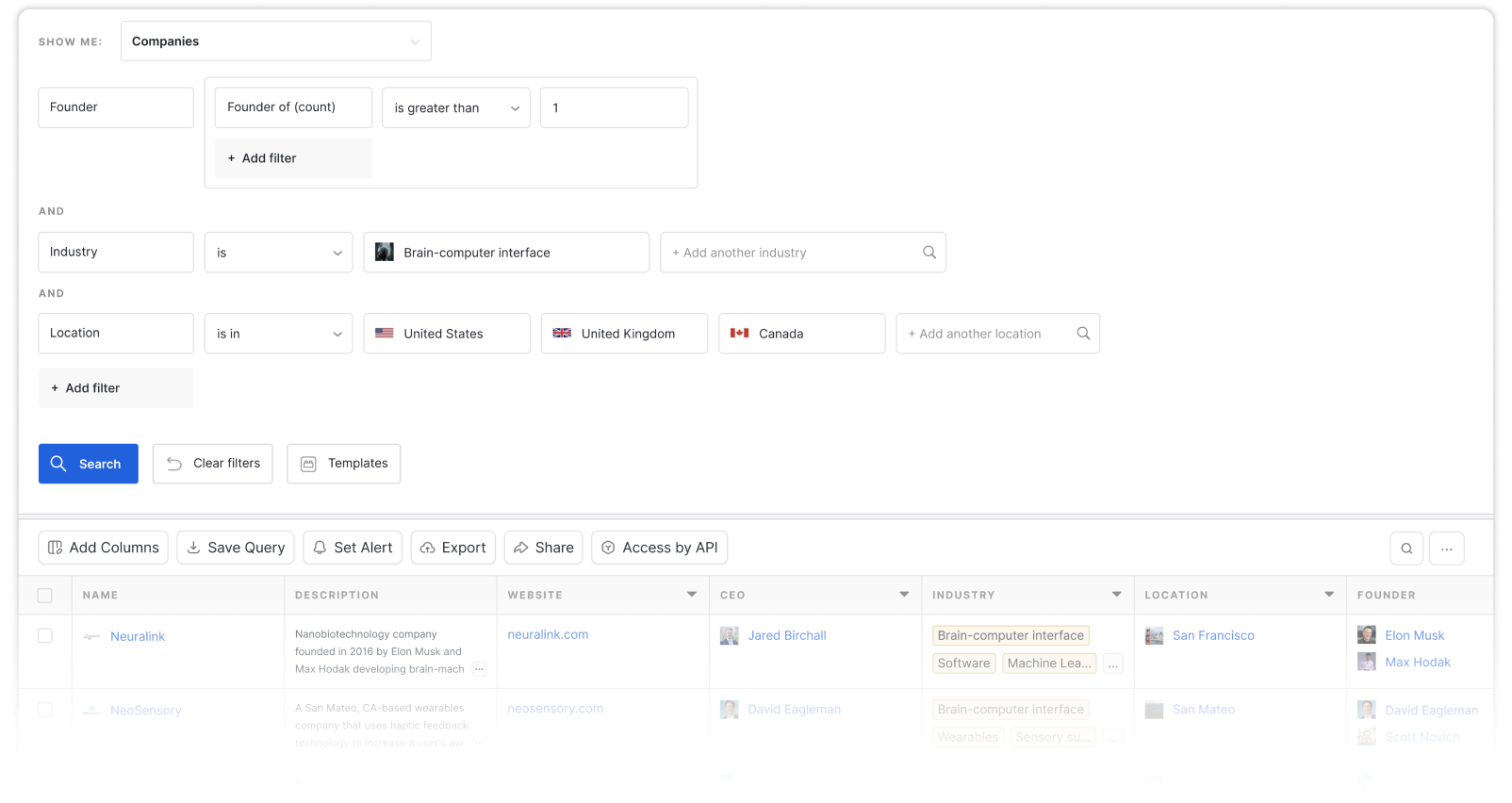
Use the Golden Query Tool to discover related individuals, professionals, or experts with similar interests, expertise, or connections in the Knowledge Graph.
Open Query Tool
Access by API
Golden Query Tool
Golden logo

Company

  • Home
  • Press & Media
  • Blog
  • Careers
  • WE'RE HIRING

Products

  • Knowledge Graph
  • Query Tool
  • Data Requests
  • Knowledge Storage
  • API
  • Pricing
  • Enterprise
  • ChatGPT Plugin

Legal

  • Terms of Service
  • Enterprise Terms of Service
  • Privacy Policy

Help

  • Help center
  • API Documentation
  • Contact Us